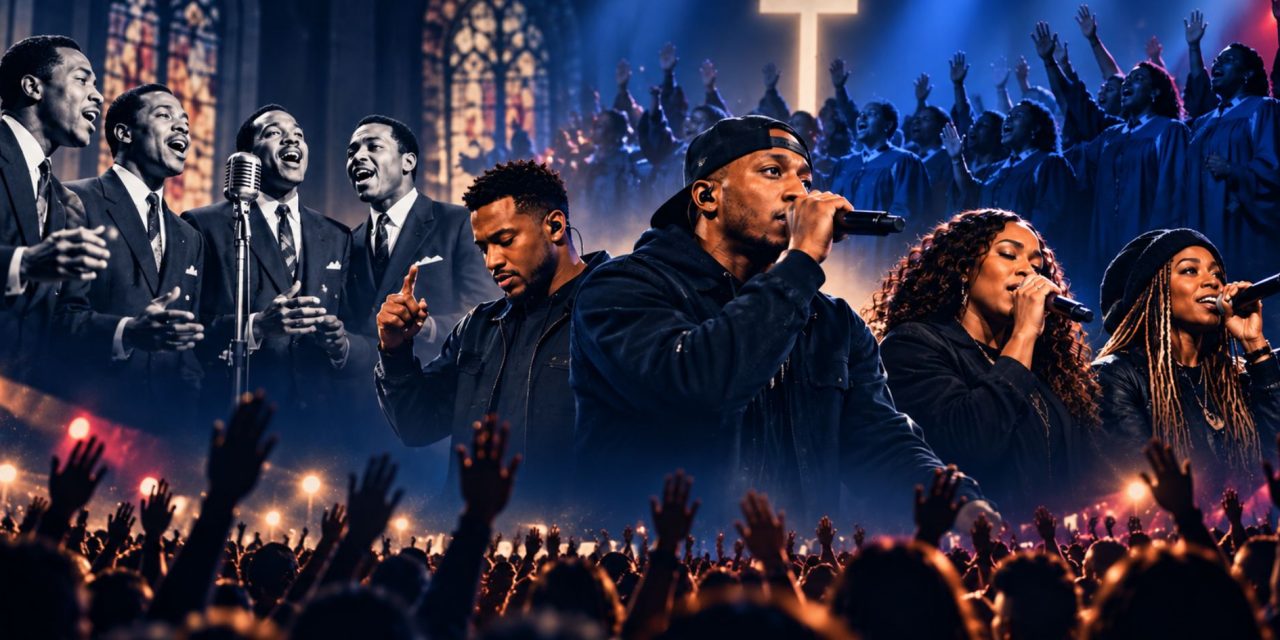
A gospel quartet can turn a few voices into a powerful testimony. Add a choir, a pulsing bassline, and a rapper sharing a personal story, and that same spirit can find a new home in Christian hip hop. The Black Gospel influence on Christian hip hop extends beyond lyrics about faith. You can hear it in call-and-response, layered harmonies, choir-backed hooks, and the tradition of sharing testimony through music.
Artists such as KB, Hulvey, Angie Rose, and Anike bring their own styles to a genre shaped by both hip hop culture and Black Christian musical traditions.
From Gospel Quartets to Modern Christian Hip Hop
Groups such as the Dixie Hummingbirds helped establish a rich tradition of Black Gospel quartet singing. Their expressive lead vocals, tightly blended harmonies, and call-and-response arrangements influenced generations of gospel performers.
As gospel music continued to evolve, artists drew on soul, funk, and R&B alongside church-based musical traditions. Choir arrangements and strong rhythmic foundations became familiar features across many styles of Black Gospel music.
Hip hop offered another way to carry those traditions forward. Christian rappers could combine testimony and faith-centred messages with beats, samples, and the lyrical techniques of rap. The resulting music wasn’t simply gospel placed over hip hop; it became a space for artists to express their faith through a contemporary musical language.
Lecrae helped bring Christian hip hop to wider audiences through his recordings, collaborations, and festival appearances. His career also reflects the genre’s ability to engage mainstream hip hop audiences while retaining its Christian identity.
KB’s Quartet-Inspired Hooks
KB’s music illustrates how Christian hip hop can bring gospel-inspired vocal energy into a modern rap arrangement. Layered vocals and repeated hooks can give a track a communal quality, echoing the call-and-response traditions found in Black Gospel.
Rather than carrying the entire song through the beat alone, harmonies can help reinforce the message. A lead voice delivers the central idea while supporting vocals add emphasis, warmth, and a sense of collective expression.
When those voices sit alongside contemporary drums and bass, the arrangement connects different musical traditions without needing to reproduce an older gospel sound exactly. The result allows the message and the musical delivery to work together.
Hulvey’s Choir-Backed Sound
Hulvey brings melodic rap and contemporary production into Christian hip hop. Gospel-inspired vocal layers can add emotional weight to this style, especially when a chorus opens up after a more intimate verse.
Choirs have long played an important role in Black Gospel, helping transform individual testimony into collective praise. In modern Christian hip hop, layered vocals can serve a similar musical purpose while fitting around electronic drums, bass, and melodic production.
The contrast between a personal verse and a fuller chorus can also make a song’s message feel more expansive. A rapper may begin with an individual reflection before the arrangement opens into a shared declaration of faith.
This approach shows how gospel traditions can inform contemporary production without limiting artists to one sound. The musical details may change, but the relationship between testimony, community, and praise remains an important part of the tradition.
Angie Rose and Anike Carrying the Tradition Forward
Angie Rose and Anike represent women bringing distinct voices and experiences to Christian hip hop. Their music connects personal testimony with contemporary rap and melodic expression, allowing faith to enter stories about everyday life.
Testimony has deep roots in Black Gospel. A singer might share a personal experience before a choir responds, turning an individual account into a message the congregation can share. Christian hip hop can adapt that relationship through spoken passages, rap verses, sung hooks, and supporting vocals.
These techniques don’t have to sound identical across artists or songs. Some tracks lean into melodic choruses, while others place greater emphasis on direct lyrical delivery. What connects them is the opportunity to communicate faith through personal experience and musical expression.
By bringing their perspectives into the genre, Angie Rose and Anike also demonstrate that Christian hip hop’s development isn’t limited to one sound, one voice, or one approach to worship. Its musical heritage continues to evolve as artists make the tradition their own.
Conclusion
The Black Gospel influence on Christian hip hop lives in more than familiar harmonies or choir-backed choruses. It also appears in the tradition of testimony, the exchange between lead voices and supporting vocals, and the connection between personal faith and community.
From gospel quartets to contemporary Christian rappers, each generation has found new ways to express enduring themes through its own musical language. The sound continues to develop, carrying elements of its heritage into new rhythms, production styles, and stories.
When you hear Christian hip hop, what connects with you most: the message, the beat, or that unmistakable gospel sound? Join the conversation with DLK Urban Gospel and Christian Hip Hop as we explore the roots and evolving sounds of faith-inspired music.