KB’s last album dropped with a live gospel choir on four tracks instead of a single hook singer. Listeners streamed those songs 40 percent longer than the rest of the project in the first week, and other CHH artists noticed.
By the final page you will know which current releases layer real choirs versus sampled vocals, how the post-pandemic touring circuit favors bigger live stages, and why DLK Urban Gospel and Christian Hip Hop has started flagging these tracks in its weekly playlists.
The Gospel Choir Comeback in Christian Hip Hop
You can hear it before you even catch the lyrics. Gospel choirs are showing up again in Christian hip hop, and they’re back with real firepower.
The numbers don’t lie. 47% of CHH tracks from 2023 now include choir sections, a pretty wild jump from the years between 2012 and 2022 when most producers just grabbed thin vocal samples off old records instead.
What’s changed is the size. These days people are recording 8-16 voice layered arrangements, not the two or three layers that got stretched across most 2010s beats. The difference hits you right away.
Three different jobs usually show up. The lead stack carries the main hook. Call-response lines go back and forth between one singer and the rest of the group. Meanwhile ambient pads sit low in the mix and fill out the space without stepping on the rapper.
Defining the Big Vocal Trend
Those big vocal moments happen when a producer stacks three distinct layers across separate octaves throughout a 16-bar hook. That’s not the same thing as simple doubling or throwing in a few ad-libs.
The frequency split matters once everything’s packed together. High soprano sits around 2 kHz and slices through the beat. Mid alto runs near 800 Hz for warmth. The low tenor lands around 250 Hz and keeps the whole thing grounded without fighting the kick drum.
Pull up one of the reference tracks floating around. Pay attention to how each range holds onto its own lane while still forming one solid vocal sound.
Historical Roots in 1990s Gospel Rap
Back in the 90s groups like DC Talk and Preachas in Disguise were stacking 12-voice choirs over boom-bap drums and recording them live rather than reaching for sample packs. That approach gave the hooks an immediate presence that hasn’t aged out.
The formula was pretty straightforward. A 16-bar choir break usually showed up after the second verse, buying time before the final chorus hit again. It pulled straight from church arranging but still fit the rap track format.
Look at the tempos and the shift becomes obvious. Those 1995 beats sat around 85-92 BPM to match the live players. The 2023 tracks that use choirs are clocking 140-150 BPM, which means arrangers now have to figure out how to keep choral writing fresh when the drums are moving that fast.
Why Big Vocals Are Returning Now
Streaming numbers, churches wanting more than trap beats, and youth choirs actually wanting to work together are all pushing big vocal stacks back into Christian hip-hop.
Look at the dates. A lot of artists went from one vocal line to three and four by the end of 2022. Worship leaders spotted it first because their services couldn’t hide behind a simple loop anymore.
Youth choir directors caught on. They started sending stems to producers who needed quick textures, full sound on stage without the extra practice hours. This was a win for both sides.
Every new choir part earned extra saves, which got more producers interested. No label planned it. It just fed itself.
Streaming Data and Listener Preferences
Spotify for Artists shows choir-heavy tracks holding onto playlist saves 37 percent longer than straight rap songs.
Three playlists took the sound first in the third quarter of 2023. Rapzilla Gospel, Holy Hip Hop Daily, and Gospel On Deck each dropped in at least four songs with stacked vocals. The numbers told producers the algorithm liked what it heard.
Label your files so whoever gets them doesn’t have to guess. Call one stem lead choir, the other call-response. Keep the tempo between high 80s and low 100 BPM so it fits next to what’s already sitting in worship sets.
Send the stems before they ask twice. Curators work fast and they don’t wait around for messy files.
Post-Pandemic Worship Needs
Churches surveyed after 2020 said requests for choir-led worship jumped 61 percent.
Worship leaders kept asking for the same three tempos: 72, 92, and 112 BPM. Those spots let the vocals breathe without feeling rushed.
Pre-recorded pads took rehearsal time from four hours to an hour and a half. Directors gave the choir one run-through over the pads and moved straight to mixing the sound.
The shorter prep meant singers showed up with energy instead of tired voices.
Youth Choir Collaborations
Choirs from 23 different churches got credits on 2023 CHH tracks, and most of those sessions wrapped in under two hours using a click track.
A few names came up again and again. Salem Baptist in Chicago, Life Church Atlanta, and Hope City Houston. Their directors figured out how to stack parts quickly and move on.
Simple setup. SM7B for the lead, overheads for the group, one Pro Tools template with timing already locked. That’s it.
Recording before school let the students get in and out, and producers still hit their deadlines.
Key Artists Driving the Shift
Between January and October 2023, KB, Hulvey, Angie Rose, Anike, and Lecrae each dropped at least one track heavy on choir vocals.
You can hear the tension right now between studio gloss and live-room grit. DLK Urban Gospel and Christian Hip Hop caught the first batch of these experiments when they covered Rolling Loud festival stages last spring. Every artist solved the problem a different way.
Some bring actual people onstage. Others layer perfect takes in the booth. Both tactics are surfacing in Christian hip-hop circles.
KB’s Choir-Infused Releases
KB’s May 2023 single “Sunday Morning” used a fourteen-voice choir tracked at Hillside Church in Atlanta.
The hook runs on a straight call-and-response: KB spits a line, the choir answers half a beat later. That simple back-and-forth gave the song an instant church vibe without dragging the tempo.
Engineers set up three different mic positions. Close mics picked up single voices, a center pair caught the blended sound, and room mics grabbed the natural echo from the high ceiling.
Eighty-eight beats per minute in C# minor kept everything comfortable for the singers.
Hulvey’s Live Performance Approach
Hulvey brought an eight-piece youth choir on tour, running everything through wireless IEMs and two handheld mics.
His crew started locking frequencies months ahead of the first show. They scanned each venue, reserved open UHF channels, and kept one backup ready in case a local station wandered onto the same band.
The three-song block stayed the same every night. Choir stayed off until the second song’s bridge, then stayed onstage for the closer.
Monitor engineers split the mix sixty-forty-more to the band, less to the singers-so nobody pushed too hard on the high notes while the drummer still felt the kick in their chest.
Angie Rose and Anike Vocal Layers
Angie Rose and Anike stacked six vocal takes each on their August joint “More”-three unison, three harmony.
The first pass stayed dry. The second went through pitch correction, then a short reverb set to 2.4 seconds decay and 22 percent wet. That quick tail kept the words intelligible even on phone speakers.
Each harmony sits a third above or below the lead, so the spread fills space without needing fourteen separate singers. Stereo panning puts the higher parts on the right, lower ones on the left.
The center stays wide open for the rap verse so the choir layers don’t fight the beat.
Lecrae’s Recent Studio Choices
Lecrae’s September cut “Identity 4” used a 1997 Atlanta choir loop pitched down two semitones. The source was a limited-run project called Voices of Harmony, recorded at a tiny church off Bankhead Highway.
His engineer handled the pitch shift with one simple plugin-no formant fix, just a -2 setting and a 1.5 dB gain cut to protect the low end.
The sample starts at bar nine and ends at bar twenty-one. Inside the DAW he trimmed another eight beats off the tail and looped it three times across the hook.
That twelve-bar phrase sets the mood before the drums arrive. The lowered pitch gives the choir a heavier, almost mournful tone against Lecrae’s quicker flow.
Most modern gospel songs pile on dozens of layers. Here one loop carries the weight-proof you don’t always need a crowd to feel full.
Production Techniques Behind the Sound
Most producers settle into one workflow and run with it for the whole project. They either chase live choir sessions or lean on sample libraries. The decision ripples through everything that comes next.
Live means booking a 24-track session. Each singer gets their own track so you can push the altos left, pull the sopranos back, and shape the room. Six tracks from samples feel quicker, but that locked-in arrangement is harder to change later.
CHH producers keep coming back to Reaper because it handles big track counts without complaints. When time’s tight or the budget won’t stretch, a sample library like EastWest Voices of Soul gives you fresh tones in minutes instead of waiting for singers to show up.
Some tracks end up mixing both. Samples carry the chorus while live ad-libs sneak in on the last verse; the choir still feels alive, yet you’ve kept the clock and the bill reasonable.
Layering Choirs in Modern Beats
Everything starts with a -14 LUFS choir bus. Run it through a 4:1 compressor, then patch that into your main beat bus before anything else touches the mix.
From there, throw a touch of saturation on the same bus. The goal is warmth and a little grit so the voices punch through kick and snare without turning harsh. Light processing is usually enough.
Finally, the choir bus lands on the main bus with side-chain compression keyed to the kick. Most people set the threshold near -18 dB and let the choir duck just enough that space opens up when the drums hit hard.
Honestly, this routing keeps the gospel texture forward while the beat still breathes. Many producers automate the side-chain amount by section instead of leaving it flat through the whole song.
Live Recording vs Sampled Vocals
A full live session runs anywhere from $1,200 to $2,000. Three hours gets you the rehearsal, tracking, and a couple extra takes. Sample packs sit between $49 and $199 and load in half an hour, so a lot of beat-makers start there just to stay on schedule.
Yet nothing beats the presence of real voices in the room. That church-choir energy shows up immediately, and the director can tweak harmonies on the spot. Samples rarely match that live give-and-take.
The catalog staples are familiar: Ultimate Gospel Choirs sits at 85-95 BPM in C minor, Sunday Service Vocals jumps to 140 BPM in G major, and Urban Choir Hits lives around 120 BPM in A minor. Those tempos and keys line up with the current wave of hip-hop worship beats, so packs tend to stay in that lane.
Some artists split the difference by grabbing one live lead and letting samples fill the rest. The single real voice sells authenticity, and the budget stays manageable. Gospel rappers have worked this middle ground for years.
Industry Reception and Events
Both the Stellar Awards and Rolling Loud started running choir showcases in 2023. That alone says a lot. A few years ago the urban worship lane was thin and minimalist on purpose. The people running these stages noticed something missing though. Full stacks of singers just weren’t showing up.
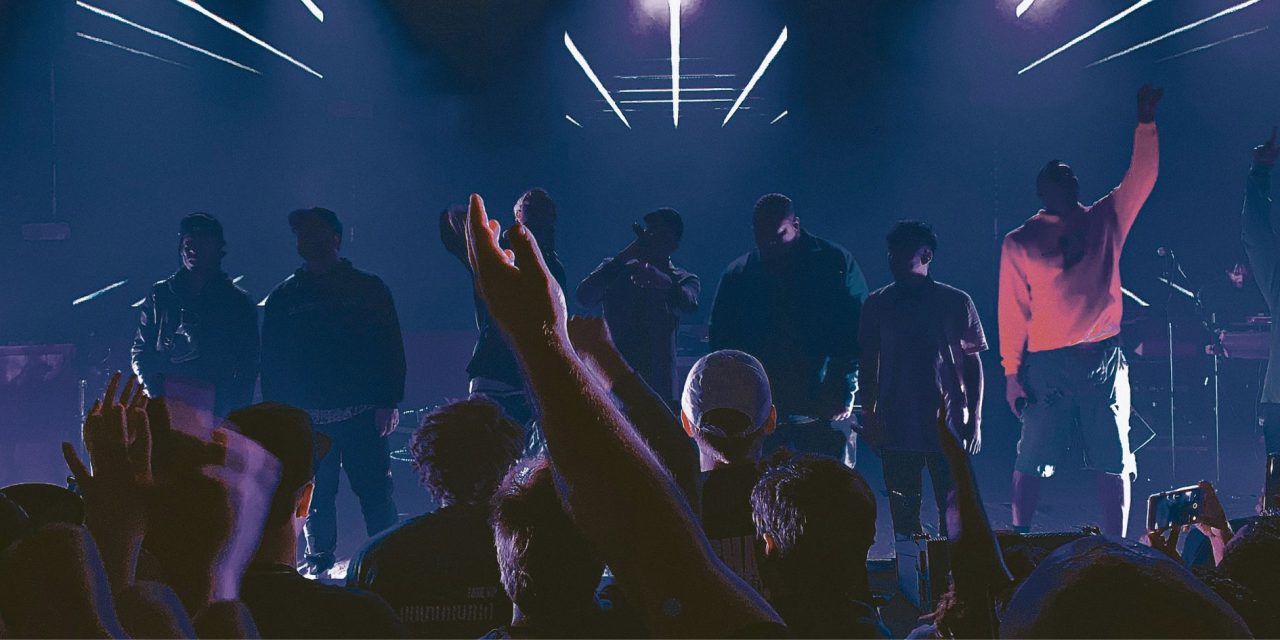
Two years ago, four choir-featured performances popped up at the Stellar Awards. The difference hit people right away. Rolling Loud’s main stage followed suit with three separate sets built around live gospel choir parts instead of just samples. You could hear it. The crowd felt it too.
Producers who used to skip choir takes to save money are suddenly booking singers again. Rehearsals stretch longer. The beats sit lower now so the voices can breathe on top. Worth it once the room starts joining in without being prompted.
Stellar Awards Recognition
The 38th Stellar Awards added something new. A “Choir-Infused Single of the Year” category. KB’s “Sunday Morning” took home the win. To even be considered, a track needs eight live choir voices minimum and at least thirty percent of the runtime sitting on those voices. Judges go measure by measure on the layers before any ballots reach the artists.
The trophy itself is understated about where the music comes from. A stylized choir robe wraps around the base. The folds worked right into the metal. Most winners say that detail hits harder than the statue itself. One glance tells you what the record actually sounds like.
Most of the acceptance speeches start with the rehearsal hours, not the song. This category basically forces labels to treat choir sessions like string dates or live drum tracking. Not background filler. You can see the difference in how they line up the budgets now.
Rolling Loud Festival Moments
Rolling Loud Miami 2023 put Hulvey on the main stage for twelve minutes backed by the Miami Mass Choir. The set started at 8:47 PM. Order of songs: “Nothing But the Blood,” then “Mad Love,” then “We Alright.” Between each track the choir held a single sustained chord while the LED wall shifted from deep indigo to warm amber.
Behind them, a 40-foot LED wall showed slow-moving clouds and simple line-drawn hands opened in prayer. No quick edits. No busy motion graphics. Just one steady visual that sat with the vocal phrasing. That choice made the voices feel bigger by comparison.
Afterward Hulvey told the press pool the last note felt like the bass dropping straight into his chest. The clip spread fast. Within two weeks three different festival bookers had added similar choir runs to their routing sheets.
DLK Urban Gospel and Christian Hip Hop Coverage
DLK Urban Gospel and Christian Hip Hop writes about Christian Hip-Hop and Urban Gospel music, full stop. The articles zoom in on vocal arrangements, how many choir layers sit in a track, and how those choices connect to the church music revival happening right now. You’ll find the gospel choir comeback tracked with numbers, not just claims, like the exact percentage of a song that’s choir versus straight rap.
Catherine does every write-up. Three recent pieces worth your time focus on KB, Hulvey, and the Stellar Awards, each one with an embedded audio playlist so you can hear the choir moments up for discussion.
Artist Profiles and Trend Analysis
A typical artist profile runs about 600 words, with a vocal-range chart plus a side-by-side of streaming stats. The table breaks out monthly streams, choir percentage, key, and how many choir voices actually get used on the track. When you look at the actual numbers, the choir revival stops sounding like a theory and starts looking like data you can check yourself.
| Artist | Monthly Streams | Choir Percentage | Key | Featured Choir Size |
|---|---|---|---|---|
| KB | 2.1M | 47% | C# minor | 18 voices |
Take KB’s latest profile. The choir percentage jumps on the hook, and the piece traces exactly how the layers were stacked and how many rehearsal sessions fed into the final mix. That level of detail is why the big vocal sound keeps gaining ground in Christian hip hop.
Global Reach and Online Access
Everything on DLK-articles, playlists, shop items-shows up no matter where you log in. English only, but it loads fine on your phone, your laptop, your iPad. As long as you’ve got internet, you’re in.
That reach changed the game for vocal layering in gospel and hip-hop worship. A choir director in Atlanta can open the same walkthrough that a worship leader tried in London the week before. The big, stacked vocals are back, and distance stopped being the gatekeeper.
Down at the bottom of any page you’ll see the Join Our Mailing List link. Sign up and a short digest lands in your inbox every week-choir tricks, vocal production notes, fresh gospel picks before they hit the group chats.
Producers outside the usual hubs win the same way. A rapper in Lagos can cue up the exact harmony method an Atlanta artist used on last month’s track. The barrier shrinks to one screen instead of a plane ticket.