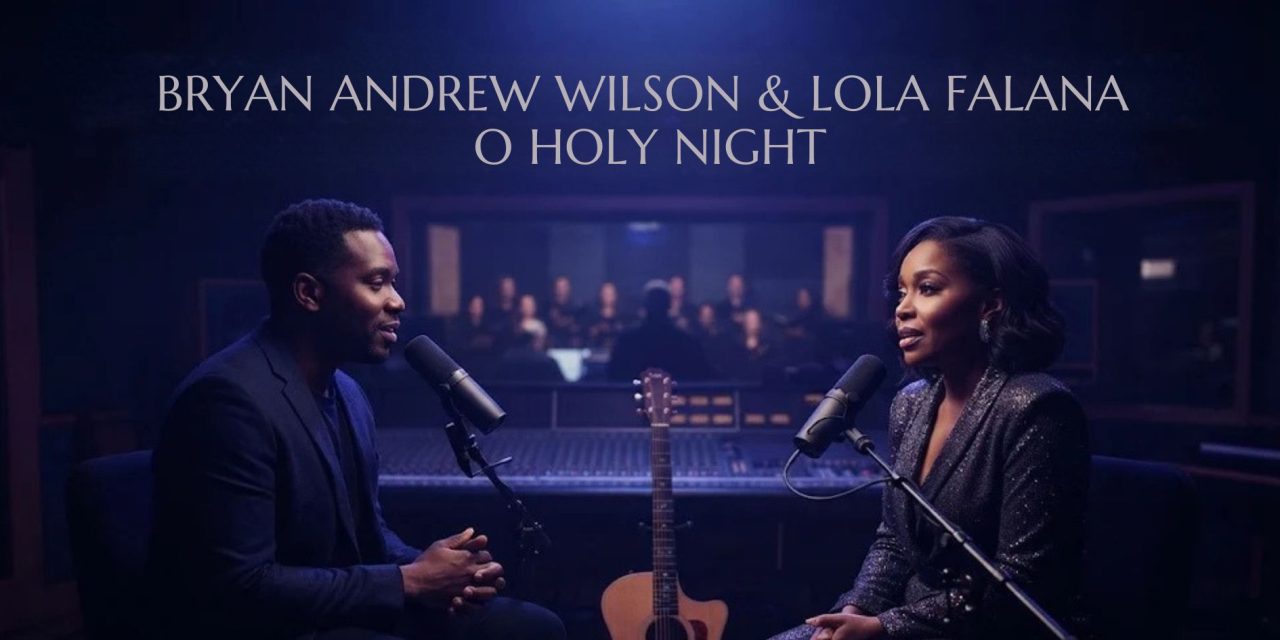
Bryan Andrew Wilson’s November 6, 2026, recording of “O Holy Night!” gives a familiar Christmas carol a different storytelling approach. Rather than relying entirely on its melody, the arrangement introduces a spoken Nativity reflection by Lola Falana. The result brings two distinct voices into a song centered on the birth of Jesus.
Apple Music credits both Wilson and Falana as performers on the main mix. Meanwhile, The Urban Music Scene identifies Nelson Braxton as the producer. The recording also arrives ahead of Wilson’s holiday album, Is It Christmas Yet?. Through its spoken passage, lead vocal and choir, the arrangement creates different ways to follow the carol’s message.
What A Spoken Nativity Reflection Adds To A Familiar Carol
Most listeners already recognize the melody of “O Holy Night.” Its familiar progression makes it easy to anticipate what comes next. However, a spoken reflection introduces a different way to experience its message.
Lola Falana’s contribution brings the Nativity story into the foreground. Without a melody carrying the words, listeners can give their attention directly to the spoken reflection. Her part shifts the focus toward the birth of Jesus before the arrangement returns to its sung expression.
The distinction between the two performers matters. Wilson carries the carol through his singing, while Falana communicates its Nativity message through speech. Their contributions serve different purposes within the same arrangement.
Falana is widely associated with her stage career, making this appearance a different kind of musical contribution. As The Urban Music Scene describes it, her spoken passage forms part of the recording’s arrangement. It is more than an additional guest credit on a familiar Christmas song.
How The Arrangement Makes Room For Both Voices And The Choir
According to The Urban Music Scene, the recording opens with acoustic guitar before Wilson’s tenor takes the lead. Falana’s spoken section follows, while orchestration and choir become more prominent during the second half.
That progression gives each element room to contribute to the carol’s story. The acoustic guitar establishes the opening atmosphere, allowing Wilson’s voice to introduce the familiar melody. Falana’s reflection then redirects attention toward the Nativity narrative.
The choir expands the arrangement beyond its individual voices. Its entrance brings a larger, collective sound to the closing portion. Together, the spoken reflection and choir create a progression from personal narration toward a shared musical expression.
There is also a practical lesson here for gospel arrangers. When introducing a spoken reflection into a familiar carol, consider what the speaker can communicate beyond the sung lyrics. The spoken passage should have a clear purpose within the arrangement.
Accompaniment matters, too. A simpler musical foundation can support the speaker without competing with the words. The fuller orchestration and choir can then enter when the arrangement needs a broader response.
A Different Way To Listen To “O Holy Night”
When listeners revisit a familiar Christmas carol, they often focus on its strongest vocal moments. This recording offers another approach: follow the transitions between its musical and spoken sections.
Notice how the acoustic guitar establishes the opening before Wilson’s tenor enters. Then listen for the shift when Falana takes over with her spoken Nativity reflection. Finally, consider how the orchestration and choir change the arrangement’s scale.
Each transition gives the carol’s story a different form of expression. Wilson, Falana and Braxton’s collaboration demonstrates how arrangement choices can redirect attention without changing the central message.
Ultimately, the recording keeps the birth of Jesus at its heart while exploring different ways to communicate the Nativity story. Wilson’s singing, Falana’s spoken contribution and the choir’s fuller presence each serve a distinct role. Together, they offer listeners a fresh way to revisit a Christmas classic.
How can familiar gospel and Christmas songs communicate their message through more than melody alone? Discover more inspiring artists, gospel releases and Christian hip-hop stories on DLK Urban Gospel and Christian Hip-Hop, where music and faith continue to meet through different forms of expression.