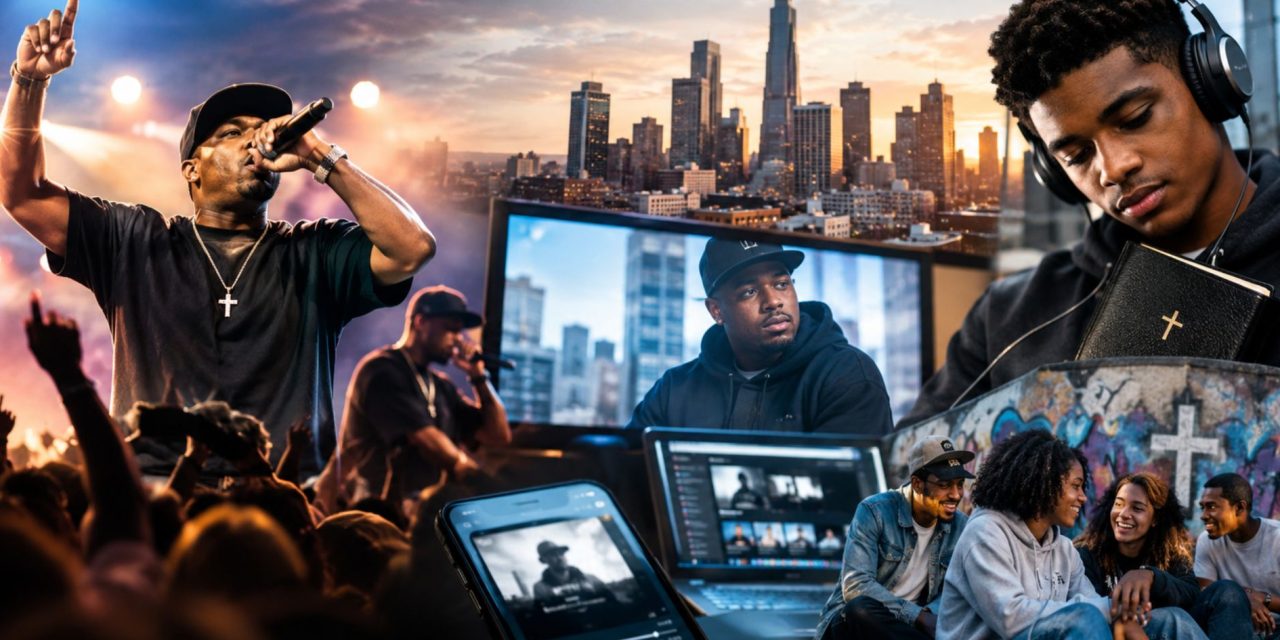
Christian hip-hop’s growing presence at mainstream festivals did more than put faith-filled rap on bigger stages. It created new opportunities for artists to reach listeners who might never enter a church or Christian music space.
Twelve months after faith-filled hip-hop reached the mainstream festival stage, the genre saw a surge in bookings and broader recognition. Artists like Lecrae and NF helped open the door for Christian hip-hop to appear alongside mainstream festival acts.
Performances at events such as Coachella and Rolling Loud represented an important shift for gospel rap in secular spaces. Faith-based artists could bring spiritual messages to diverse crowds without removing the identity behind their music.
The effects also reached beyond festival grounds. Social media clips, audience reactions, and genre experimentation helped carry these moments into youth culture and online communities.
From Festival Stages to a Wider Cultural Conversation
The rise of Christian hip-hop within mainstream festival spaces created opportunities that extended beyond individual performances. Artists were able to introduce faith-based lyrics to audiences with different musical backgrounds and expectations.
Pioneers helped establish this foundation by delivering messages about faith, redemption, and personal transformation to diverse crowds. Their presence demonstrated that spiritual themes could exist within broader hip-hop environments.
Festival performances also created memorable moments through crowd reactions. Audience members sang along to tracks carrying spiritual messages, creating an unexpected connection between artists and listeners.
That interaction mattered because mainstream exposure gave newer artists more room to tell redemption stories without compromising their central message. A festival set could therefore become more than another performance slot.
It could become an introduction to a different perspective.
1. Mainstream Exposure and New Opportunities
The increased visibility of Christian hip-hop helped create a wider platform for artists working within the genre. Festival appearances placed faith-based rap alongside established mainstream acts and exposed performers to new audiences.
Artists such as Lecrae and NF helped demonstrate how Christian themes could coexist with contemporary hip-hop production and songwriting. Their success contributed to greater recognition for artists carrying similar messages.
The change was also reflected in bookings and broader industry attention. Mainstream festival appearances gave Christian hip-hop artists opportunities to reach listeners outside traditional gospel and Christian music spaces.
For audiences, the experience could be equally significant. Someone attending a festival for mainstream hip-hop might encounter a Christian rapper without specifically looking for faith-based music.
That creates a different kind of introduction.
The artist does not need the listener to arrive already interested in Christian music. The performance itself becomes the starting point for the conversation.
This helped challenge the idea that gospel rap belonged only in explicitly Christian environments. It also gave artists another platform for discussing faith, struggle, redemption, and identity.
The cultural impact therefore extends beyond festival attendance. Each performance can introduce new listeners to a genre that they may previously have overlooked.
Social Media, Genre Fusion, and the Next Generation
The festival crossover also gained momentum through social media. TikTok clips, Instagram Lives, and shared performance moments allowed audiences to experience festival appearances long after the artists left the stage.
This gave holy hip-hop another route into youth culture. A memorable performance could become a short video, a reaction, a shared clip, or part of a wider online conversation.
Social media also helped blur the boundaries between music communities. Faith audiences could engage with mainstream hip-hop moments, while secular listeners could encounter Christian artists through the same digital platforms.
That interaction created opportunities for unity between faith communities and secular audiences. Clean rap, positive messaging, and shared musical energy provided common ground without requiring everyone to share the same beliefs.
2. From Mainstream Crossover to Genre Fusion
The resulting cultural exchange also encouraged musical experimentation. Christian hip-hop artists could draw from contemporary production styles while maintaining faith-centered lyrics.
One example is trap gospel, which combines trap-influenced production with Christian and gospel themes. Such genre fusion demonstrates how Christian music can respond to changes within hip-hop rather than remaining separate from them.
These developments also expanded the possibilities for lyrical evangelism and worship rap. Artists could communicate faith through different rhythms, production styles, and performance approaches.
Their festival sets became part of that evolution.
Beat switches, crowd interaction, and encores could create moments that audiences remembered beyond the original performance. For artists, these moments also provided opportunities to demonstrate authenticity and communicate their message naturally.
The impact does not depend entirely on whether every listener becomes a Christian music fan. Cultural influence can also happen when an audience simply encounters an unfamiliar perspective through music.
That encounter can start a conversation, inspire another artist, or encourage a young listener to explore the genre further.
Over time, those individual moments can contribute to a larger cultural shift. Mainstream crossovers create opportunities for Christian hip-hop to remain visible, adaptable, and connected to the wider music landscape.
Conclusion
Christian hip-hop’s mainstream festival presence created more than isolated breakthrough performances. It helped expand the spaces where faith-based rap could be heard and introduced spiritual messages to audiences beyond traditional Christian music circles.
Artists such as Lecrae and NF helped establish a path for broader recognition. Festival performances then carried those conversations into social media, youth culture, and new forms of genre fusion.
The growth of trap gospel, worship rap, and lyrical evangelism shows how that influence can continue developing. Christian hip-hop does not have to abandon its message to participate in changing musical spaces.
Sometimes, the most lasting impact begins with simply being given a bigger stage.
Ever found yourself vibing to a rap song before realizing the lyrics were pointing you straight to faith?
DLK Urban Gospel and Christian Hip-Hop follows that crossover between the beat, the message, and the audience.


