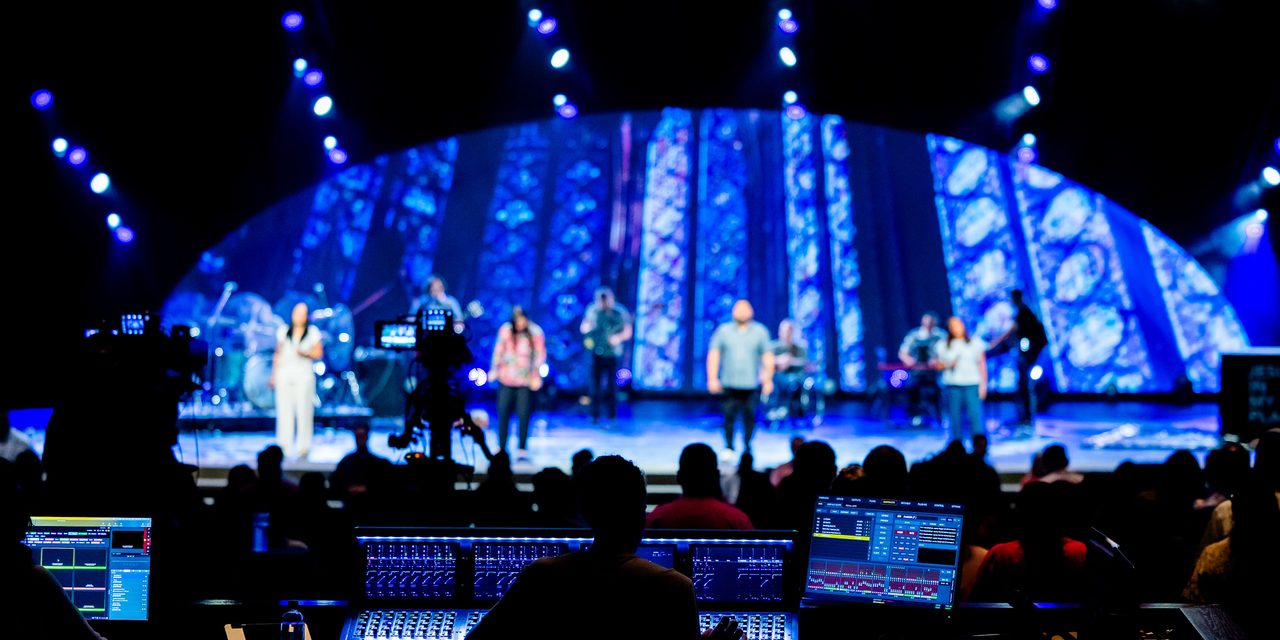
A live gospel recording captures more than the songs being performed. It captures the room, the congregation, the musicians, and the small sounds that prove everyone was there together.
Black gospel music has long relied on this sense of collective musical experience, where voices, instruments, worshippers, and the acoustics of the room can all become part of the performance. That quality becomes especially noticeable on live recordings, where very little needs to be manufactured.
That is part of what gives live Black Gospel albums their distinctive character. Unlike studio recordings, these performances allow the physical space and the people inside it to become part of the sound.
Room Ambience and Natural Reverb as Signature Sound
Live Black Gospel recordings often preserve the natural ambience of the room rather than removing every trace of it. The result can include shifting wooden benches, moving feet, program pages, applause, and other subtle sounds from the congregation.
Those details may seem insignificant, but they give the recording a sense of place. They remind the listener that the performance happened once, in a specific room, with a specific audience.
The sanctuary’s natural acoustics also shape how the choir sounds. A typical church space can produce a reverb tail lasting around 2.8 to 3.4 seconds, depending on its size, surfaces, and construction.
That extended reverberation allows sustained vocals and instruments to continue moving through the room after the original sound has been produced. Instead of ending immediately, a choir chord can seem to travel beyond the singers themselves.
The effect becomes especially noticeable with clapping and tambourines. Their sharp transients bounce around the room, creating layers that would be difficult to reproduce perfectly with a studio effect.
On headphones, that natural decay can make the recording feel surprisingly spacious. The sound seems to have somewhere to go rather than stopping at the edges of the mix.
Call-and-Response Dynamics Captured in Real Time
Live performance also changes the way call-and-response works.
A worship leader can sing a phrase and receive an immediate response from the choir or congregation. There is no need to edit the exchange into existence because the musicians and singers are reacting to one another as the performance unfolds.
That timing matters. The response can arrive almost immediately, creating the feeling of one musical thought passing through several voices.
The harmonies also help keep the exchange musically grounded. Vocal responses often sit around familiar intervals such as fourths and fifths, giving the parts enough separation to remain clear while still sounding connected.
The band has to respond just as quickly.
A drummer may adjust the groove when the congregation gets louder. An organist may extend a vamp when the choir continues responding. A worship leader might repeat a line because the room has not finished answering it.
None of those decisions necessarily exist on the original set list.
That is precisely what makes the recording valuable. Live Black Gospel albums preserve the musical decisions made in real time, including the tiny changes that a polished studio production would normally remove.
Every tambourine hit, stomp, vocal response, and instrumental adjustment becomes part of the performance’s history.
The recording does not simply document what the musicians played. It captures how the musicians, singers, and congregation responded to one another in the moment. That communal quality also reflects Black gospel music’s impact on worship, where participation, response, and shared musical expression can become part of the worship experience itself.
Conclusion
The distinctive sound of a live Black Gospel recording comes from more than having an audience in the room. Natural reverb, room ambience, spontaneous responses, and real-time musical adjustments all become part of the final recording.
Those elements give the music something difficult to manufacture in a studio: evidence of a shared moment.
When you listen to a live gospel album, what pulls you in first—the voices, the atmosphere, or the energy of everyone responding together?
DLK Urban Gospel and Christian Hip Hop explores the musical traditions behind those unforgettable live moments.