Some gospel songs sound great through headphones. Others make you wish your headphones could somehow fit an entire church inside them. That difference explains why listeners still return to live Black Gospel albums when they want to feel the room move, not simply hear a track play.
Studio versions can polish a song until every note sits perfectly in place. Live recordings leave room for the congregation’s timing, spontaneous ad-libs, and those unexpected moments that happen only once. The gap becomes obvious when an algorithm buries a fifteen-minute live recording behind shorter studio cuts.
By the end, you will understand why call-and-response sections struggle for playlist placement. You will also see how artists like KB and Angie Rose decide when to record live, and which church-floor details survive in the final mix. Most importantly, we will look at how DLK Urban Gospel and Christian Hip Hop tracks the sales patterns between live and studio releases.
The Emotional Power of Live Black Gospel Recordings
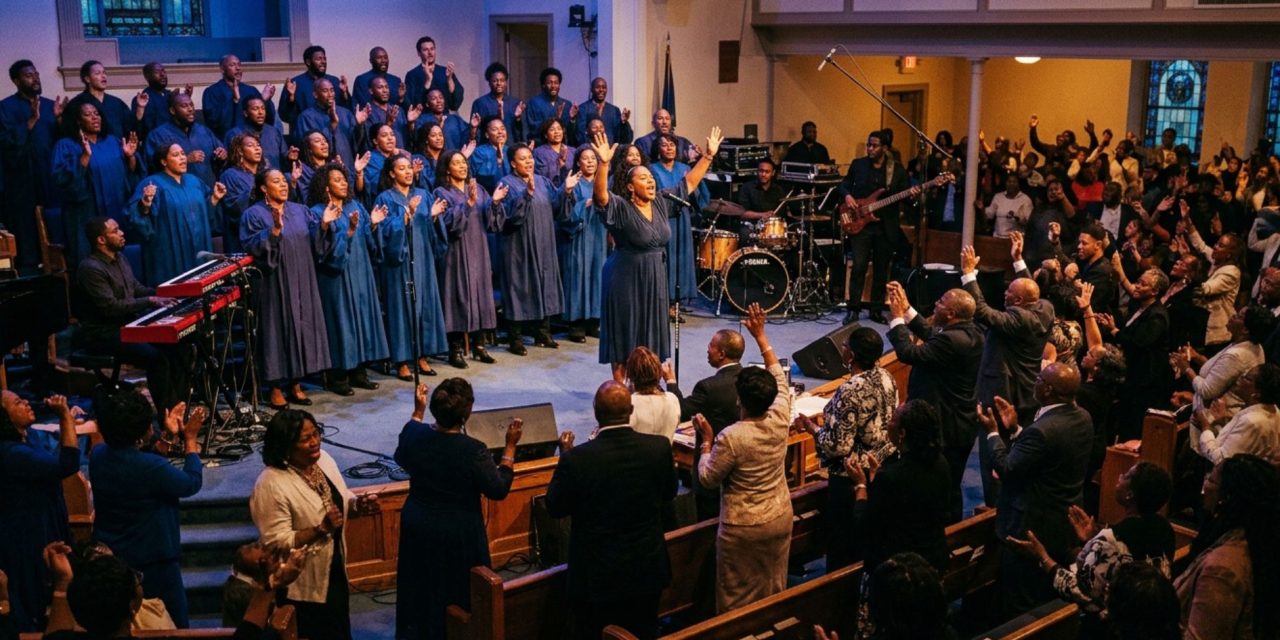
Live Black Gospel recordings carry something that is difficult to recreate inside a studio. The entire sanctuary reaches the microphones at once, from shoes hitting the floor to voices bouncing off the back wall.
Everything breathes together.
That atmosphere pulls listeners directly into the room. You are not simply hearing a finished track. You are experiencing something that happened with an entire congregation.
That is part of the lasting appeal of live Black Gospel albums. They capture reactions that cannot always be planned, rehearsed, or recreated later.
Artists like KB and Lecrae play this same hand when they hit the stage with DLK Urban Gospel and Christian Hip Hop. The difference becomes obvious quickly.
Bodies move. Timing stretches by a beat. Someone answers the singer before the song even lands. None of those reactions can be completely written into a chart.
Why Studio Polish Can’t Replace Raw Congregation Energy
Studio production can remove the creaks, stomps, and background noise that make live gospel recordings feel alive. Those small sounds matter more than they seem.
Strip them away, and the entire performance can feel flatter.
Live albums preserve three layers that may never survive the control room. Clapping lands between 65 and 75 decibels. Tambourine rims cut through at 80 to 90. Shouts from the pews can reach 95 to 105.
Miss those details, and the difference becomes noticeable.
Play the same song in its live and studio versions. The gap jumps out almost immediately.
Spontaneous Worship Moments That Streaming Can’t Replicate
Some of the strongest moments happen when the worship leader senses the room shifting and decides to follow it. The recording captures that decision, but the decision only exists because the moment actually arrived.
One 2019 project keeps a forty-five-second testimony that nobody planned. It begins right after the choir sings “You brought me” at the two-minute mark.
Eleven seconds later, another voice cuts through with, “I almost gave up.”
At two-twenty-eight, the organ player drops the key by a half step. The choir follows without hesitation. There is no cue and no warning.
There is simply a room moving together.
That is the magic listeners continue finding in live Black Gospel albums. The recording does more than preserve music. It preserves a moment that cannot be scheduled, polished, or perfectly repeated.
Conclusion
The streaming era may reward shorter songs, but it cannot completely replace the emotional pull of a room responding together. Live gospel recordings preserve the voices, movement, spontaneity, and unexpected reactions that studio production often smooths away.
That is why live Black Gospel albums still matter. They do more than document songs. They capture moments that were never meant to happen exactly the same way twice.
So, what makes a live gospel moment powerful enough to keep listeners coming back even when streaming favors shorter studio tracks?
Find the answer through more stories, music, and conversations exploring the sounds shaping gospel and Christian Hip Hop at DLK Urban Gospel and Christian Hip Hop.