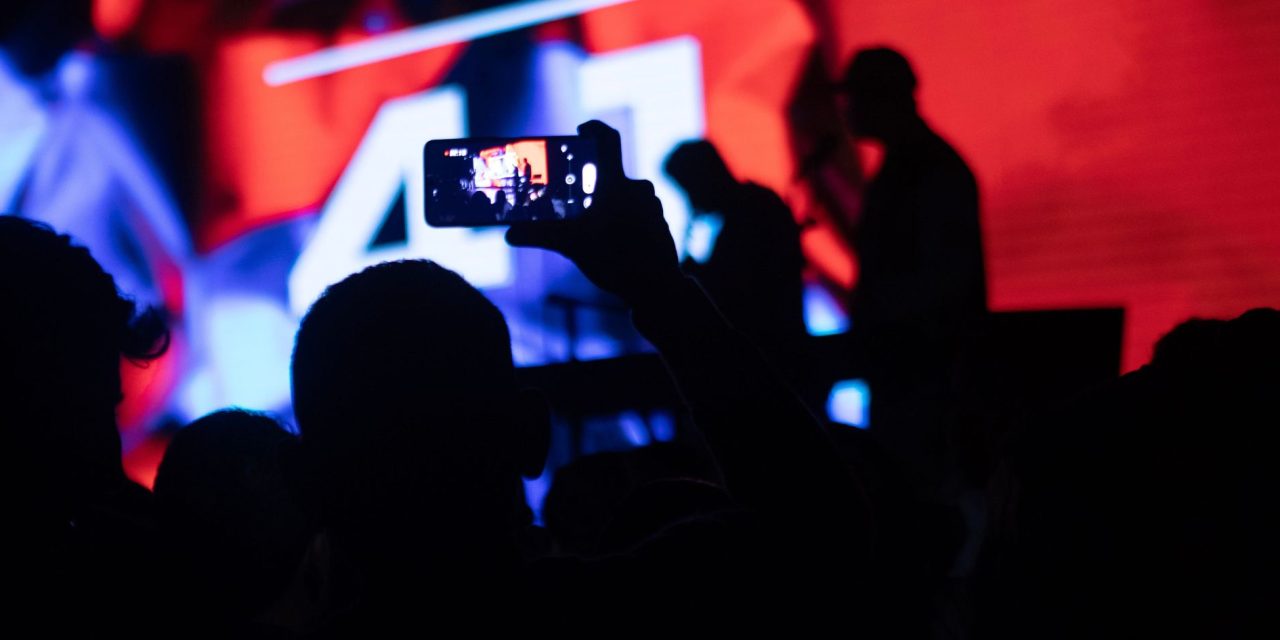
Live gospel was never designed to hurry. A song can begin as a simple chorus, stretch into a vamp, and suddenly become a full congregational moment.
Streaming platforms operate differently. They reward quick engagement and often favor shorter tracks, creating an awkward tension for live Black Gospel albums. The very moments that make a live recording powerful can also make it harder for the music to reach new listeners.
When Live Gospel Meets the Streaming Algorithm
Long live recordings face an obvious challenge in a listening environment built around immediate attention. Many platforms favor shorter songs because listeners are more likely to stay through the opening moments.
The original piece puts the average live track at around seven minutes and 42 seconds, considerably longer than the roughly three-minute tracks often favored by playlists.
That creates a difficult situation for live gospel artists. A spontaneous performance may need several minutes to build properly, while an algorithm may interpret that slower development as a reason to show the track to fewer people.
The problem is not necessarily that listeners dislike longer gospel performances. It is that streaming systems can struggle to understand why someone might stay through an extended musical moment.
A live recording can therefore lose visibility before its strongest section even arrives.
The Challenge of Playlist Placement
Playlist placement creates another hurdle.
Editors often prefer tracks that immediately communicate their appeal, particularly when they are choosing music for large playlists. According to the original piece, songs exceeding five minutes can face greater difficulty unless they are already established gospel favorites.
That puts newer live Black Gospel albums at a disadvantage.
Some artists have experimented with making the opening moments more immediate. Shortening lengthy introductions and providing alternative versions can make a recording easier to approach without removing the complete live performance.
The full recording can still preserve the atmosphere, extended vocals, and audience interaction that made the original performance worth capturing.
It becomes a question of presentation rather than removing the experience altogether.
When the Praise Break Becomes the Problem
Few things represent live gospel better than a praise break.
The band stretches the groove, the lead vocal responds to the room, and the congregation becomes part of what happens next. There may be a key change, an improvised vocal line, or several minutes that could never have been planned.
Those moments are difficult to measure through conventional streaming behavior.
The original piece reports that listeners are 42 percent more likely to leave when an unexpected modulation occurs. It also identifies roughly 19 seconds into a spontaneous praise break as a common point for listener drop-off.
That creates an ironic situation.
The moment where a live gospel performance should reach its emotional peak can become the moment when a streaming platform decides listeners are losing interest.
Preserving the Live Experience
The answer does not have to be eliminating improvisation.
Instead, artists can make the structure of a live recording easier for listeners to understand. Clear track information can help indicate where extended praise breaks or other spontaneous sections occur.
That allows listeners to approach the recording with some expectation of what they are about to hear.
More importantly, artists should not assume every live performance needs to behave like a studio single.
The audience reactions, imperfect transitions, extended vamps, and unexpected musical turns are often the very things that separate a live gospel album from a collection of polished studio recordings.
For live Black Gospel albums, preserving that character matters.
Conclusion
Live gospel thrives on patience, participation, and moments that cannot always be planned. Streaming platforms, meanwhile, often reward music that captures attention quickly and keeps listeners moving through a track.
That creates a real challenge for live Black Gospel albums, especially when extended praise breaks and spontaneous performances are central to their identity. The future may depend on finding better ways to present those recordings without sanding away their most human moments.
Would you rather hear a live gospel performance exactly as the room experienced it, or trim the journey to reach the powerful moment faster?
DLK Urban Gospel and Christian Hip-Hop explores the gospel recordings, traditions, and musical moments worth experiencing in full, including the live sounds that refuse to fit neatly into a three-minute format.