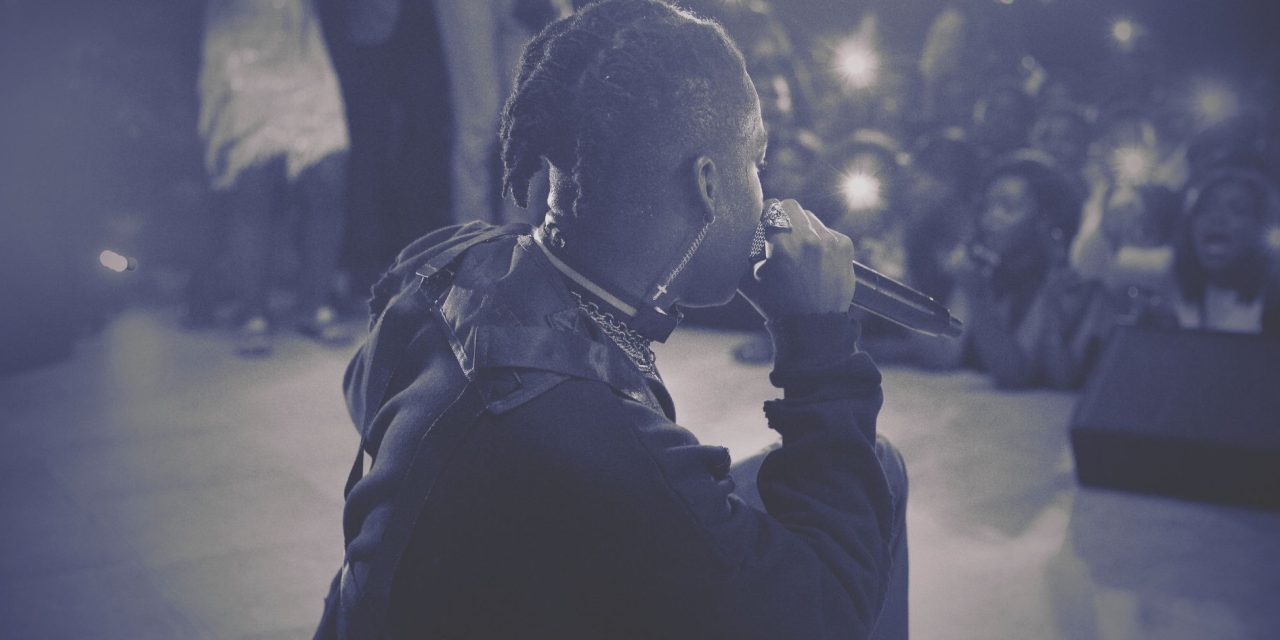
For a long time, Christian Hip-Hop was treated like the genre standing outside mainstream rap with a church flyer and a dream. Now, the same culture that once struggled for industry respect is showing up on major festival stages, dominating streaming playlists, and pulling millions of listeners far beyond church walls. The growth has been impossible to ignore.
That momentum is shaping a very different future for CHH. Artists like Lecrae and NF helped prove faith-centered rap could thrive commercially without losing its message, while newer artists continue blending sharp production, vulnerability, and cultural relevance in ways that feel increasingly natural within modern hip-hop.
Rolling Loud Opened a New Door
Rolling Loud’s embrace of Christian Hip-Hop signaled something bigger than a single festival lineup. It showed that CHH artists could hold their own in spaces once considered unreachable for faith-centered rap. Instead of sounding disconnected from mainstream culture, newer artists now blend sharp production, modern flows, vulnerability, and biblical themes naturally within today’s hip-hop landscape.
That crossover matters because younger listeners care less about genre labels and more about authenticity. If the music feels emotionally real, they connect with it. Christian Hip-Hop artists have increasingly learned how to deliver conviction without sounding preachy, which has helped the genre grow far beyond church audiences.
The influence of artists like Kanye West during the Jesus Is King era and Chance the Rapper with gospel-inspired production also helped normalize spiritual themes inside mainstream hip-hop conversations. That cultural overlap opened new opportunities for Christian rappers entering larger spaces.
Streaming and Viral Growth
Streaming has completely reshaped how Christian Hip-Hop spreads. Earlier generations relied heavily on church networks, Christian radio, or physical mixtapes. Now, one viral TikTok clip or Spotify playlist placement can expose an artist to millions overnight.
This has especially benefited subgenres like trap gospel, melodic CHH, and drill-inspired Christian rap. Younger audiences already consume those sounds daily, so Christian artists entering those styles feel culturally current rather than musically behind.
Platforms like YouTube have also helped fuel the genre’s growth through cyphers, live performances, freestyles, and reaction culture. Fans engage with artists more directly now, which strengthens loyalty and creates stronger online communities around CHH culture.
The Push Toward Mainstream Recognition
One major long-term goal for the genre is broader industry recognition. Christian Hip-Hop still sits in a strange position where it often performs well commercially but remains underrepresented in mainstream hip-hop award spaces.
That could change over the next decade.
Industry conversations around dedicated Grammy rap gospel categories, larger festival representation, and expanded Billboard visibility continue to grow. As Christian Hip-Hop artists consistently compete sonically with mainstream rap, the gap between “Christian artist” and “hip-hop artist” keeps shrinking.
The success of independent labels like Reach Records also proves the genre does not need traditional industry systems to survive. CHH has increasingly built its own ecosystem through touring, merchandise, streaming, and loyal fan support.
Global Expansion
Christian Hip-Hop’s future is not limited to the United States anymore. The genre continues growing rapidly across Africa, Europe, and Latin America, where younger audiences connect strongly with both hip-hop culture and faith-centered storytelling.
Artists now perform internationally to crowds that already understand the sound and culture. Social media has erased many of the barriers that once kept regional Christian rap scenes disconnected from one another.
This global growth also means more stylistic experimentation. African rhythms, UK drill influences, amapiano production, and Latin trap elements are beginning to shape the next wave of Christian Hip-Hop in exciting ways.
Conclusion
Christian Hip-Hop’s future looks far bigger than many people expected even a decade ago. What was once treated as a small church subgenre is steadily evolving into a global movement capable of influencing mainstream hip-hop culture while still holding onto its spiritual identity.
The genre’s biggest strength may actually be its willingness to evolve. Christian Hip-Hop no longer feels trapped between sounding “too churchy” or “too secular.” The strongest artists today understand how to balance conviction, creativity, vulnerability, and cultural relevance all at once.
And honestly, seeing Christian rappers go from performing at youth rallies to showing up on major festival stages still feels a little surreal in the best possible way.
Have you ever heard a Christian Hip-Hop song at exactly the moment you needed it most — the kind that felt less like music and more like somebody finally understanding what you were carrying?
For more real conversations on the music, artists, and culture shaping Christian Hip-Hop today, stay connected with DLK Urban Gospel and Christian Hip-Hop.