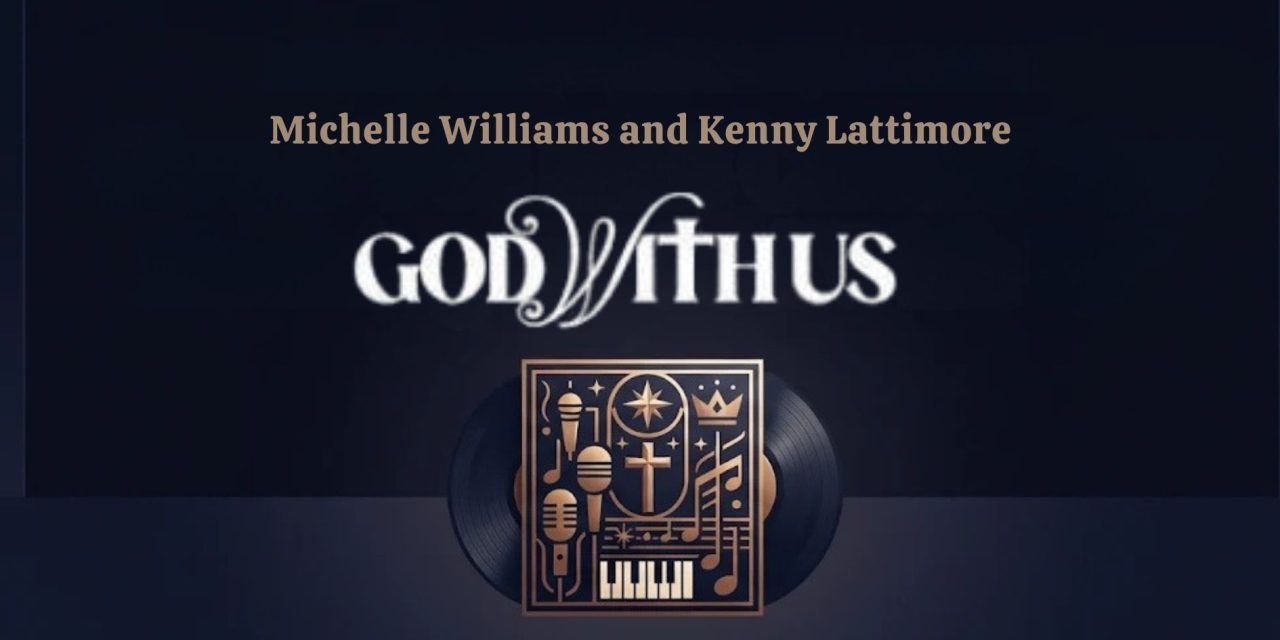
Michelle Williams and Kenny Lattimore released “God With Us” on November 13, the same day its accompanying film opened in select U.S. theaters. The Tyscot release listing bills the two singers together. However, longtime R&B listeners have another reason to pay attention. The song’s melody draws on Tevin Campbell’s 1993 single “Can We Talk.”
That connection gives the inspirational release a familiar musical starting point. But how does a melody associated with a romantic R&B classic find a new home in a faith-centered song? The answer lies in interpolation, a different arrangement, and the voices carrying the melody.
One Familiar Melody in a Different Song
The Journal of Gospel Music identifies Nikki Shenise Grier, Babyface, and Darryl L. Simmons as the credited writers of “God With Us.” The release announcement names Harmony “H-Money” Samuels as producer. It also describes the use of Campbell’s melody as an interpolation.
In simple terms, interpolation happens when musicians replay or re-sing a recognizable musical passage in a new recording. They recreate the musical idea rather than directly using the original recording. A sample, by comparison, incorporates an actual portion of the earlier recording.
That distinction matters when comparing these two songs. “God With Us” draws on the familiar melody from Campbell’s “Can We Talk,” but places it within a different musical and lyrical setting.
Campbell’s 1993 single uses the melody in a romantic R&B song. Williams and Lattimore bring that familiar musical idea into a faith-inspired release connected to a film retelling the Nativity in a contemporary setting.
The melody provides a recognizable connection between the recordings. However, the change in subject gives listeners a different way to interpret the musical idea. What once accompanied a romantic message now supports a song centered on faith.
Hear What the Duet Adds
A useful way to explore the interpolation is to listen to both recordings side by side. Start with Campbell’s original and follow the shape of a melodic phrase. Notice where it rises, where it settles, and how it reaches its resting point.
Then play “God With Us” and listen for that melodic contour again. The familiarity becomes a starting point for hearing what the new arrangement contributes.
Pay particular attention to Williams and Lattimore’s vocal interplay. Notice when one singer carries the melody and when the other joins or takes over. Listen for the moments when their voices begin to sound like one unified performance.
This comparison also offers a useful lesson for gospel singers and arrangers. Try singing a familiar phrase with one lead voice before passing it to another singer. Then bring both voices together while keeping the words and pulse unchanged.
Notice how the change in vocal arrangement affects the listener’s experience. The melody remains recognizable, but different voices can give the same musical phrase another dimension.
“God With Us” provides a timely example of this creative approach. It connects a familiar ’90s R&B melody with a contemporary faith-centered setting, while giving two singers room to shape its delivery.
Why the Musical Connection Matters
Interpolations can create an immediate point of recognition for listeners familiar with an earlier recording. However, recognition is only part of the creative process. The new arrangement, lyrical context, and performers determine how that familiar idea functions.
For Williams and Lattimore, the connection to “Can We Talk” offers a bridge between two musical settings. Listeners can appreciate the original melody while considering how its new context changes its meaning.
The duet also creates an opportunity to examine how two voices can work together around one familiar melodic idea. Sometimes, a song’s most interesting detail isn’t entirely new. It’s what artists choose to do with something listeners already know.
How can a familiar melody take on a different meaning when its message and vocal arrangement change? Explore more artist releases, gospel collaborations, and contemporary Christian music stories on DLK Urban Gospel and Christian Hip-Hop.