Christian hip-hop has always understood the power of a good feature. One rapper brings the testimony, another brings the perspective, and suddenly the track tells a bigger story.
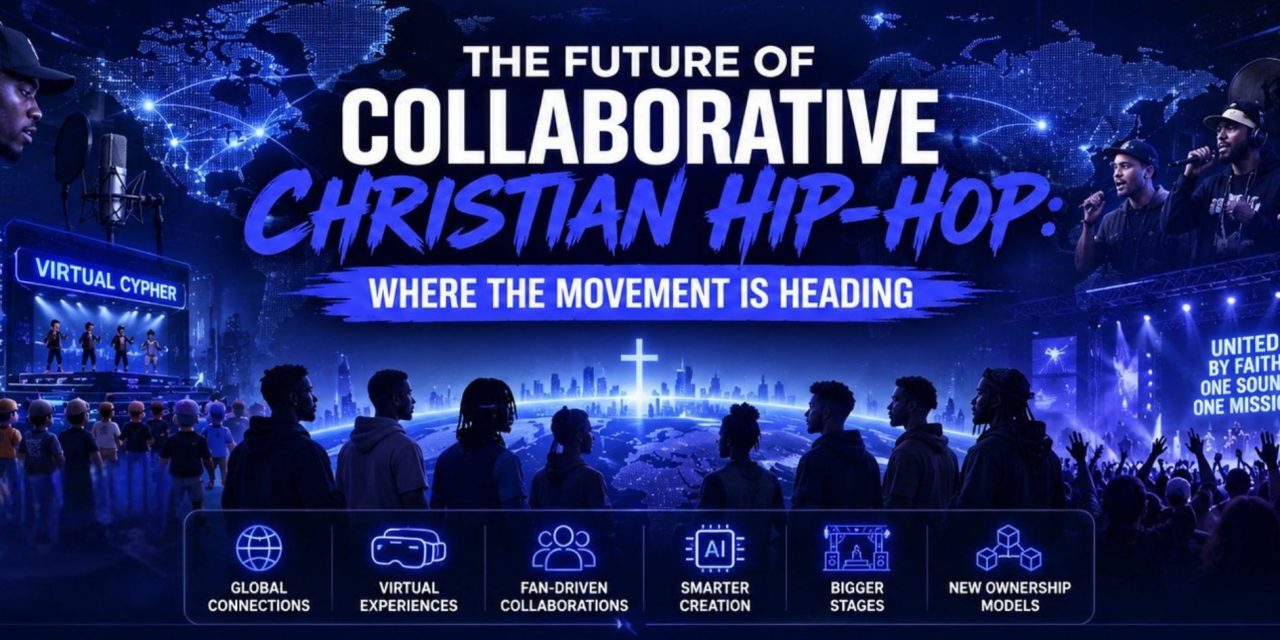
That spirit of collaboration could become even more important as the genre moves forward. Global connections, virtual spaces, fan participation, and larger events are creating new ways for Christian artists to work together.
The future of collaborative Christian hip-hop may not simply mean more guest verses. It could mean a more connected movement where artists and listeners help shape what comes next.
Where Christian Hip-Hop Collaboration Is Heading
The next phase of CHH collaboration is likely to stretch beyond the traditional studio session. Artists can already connect across countries, work remotely, and reach audiences without sharing the same physical space.
Virtual events could push that idea further. Roblox and other digital platforms have already demonstrated how musicians can gather large audiences in virtual environments.
Virtual Cyphers and Global Connections
Imagine a Christian cypher where the artists are spread across several countries, yet the audience experiences the performance together.
Metaverse festivals could give Christian emcees virtual stages for collaborative performances, allowing fans to participate from almost anywhere. These events could also introduce listeners to artists they might never discover through traditional festivals.
The bigger opportunity, however, may come from global collectives. Christian rappers from different countries can combine their cultural perspectives without having to sound identical.
A collaborative project featuring artists from Africa, North America, Europe, and Latin America could bring different languages, rhythms, testimonies, and experiences into one project.
That would give CHH collaboration another dimension. The feature would no longer simply add another verse. It could add another culture.
The same idea could extend to major tours. A large collective could bring dozens of Christian rappers together for shared performances, creating concerts built around community rather than one headliner.
Fans Are Becoming Part of the Collaboration
Another interesting shift is the growing role of listeners in deciding what gets created.
Platforms such as Patreon already allow artists to involve supporters in creative decisions. That could eventually extend to fan-voted collaborations, where listeners help choose artists for features, remixes, or joint projects.
A fan choosing between two potential collaborators may sound simple. Across an entire project, however, those decisions could shape the music itself.
This could lead to more collaborative albums, special releases, and unexpected pairings driven by audience interest.
AI-assisted production may also make cross-border collaboration easier. Artists can develop ideas quickly, exchange demos, and experiment with hooks before bringing their own voices and perspectives into the finished track.
The technology matters less than what artists do with it. The strongest collaborations will still depend on chemistry, conviction, and something meaningful to say.
That distinction will become increasingly important as more tools make music creation faster.
Bigger Stages for Collaborative CHH
The final piece of the puzzle is visibility.
Christian hip-hop artists are already appearing across major music festivals and broader cultural spaces. The next step could be more dedicated CHH stages and collaborative performances within major festival lineups.
A dedicated stage could bring several Christian rappers together instead of presenting the genre through individual appearances. It would give audiences a fuller picture of the movement and its range.
Artists such as Lecrae could also become important bridges between CHH audiences and larger festival crowds through high-profile collaborations.
The potential impact goes beyond bigger numbers. When multiple artists share a stage, the audience sees the genre as a connected community rather than a collection of individual careers.
The Road Ahead
| Year | Potential Milestone |
| 2024 | VR cyphers emerge through platforms such as Roblox |
| 2025 | AI tools become more common in collaborative music-making |
| 2026 | Global collectives begin developing larger collaborative projects |
| 2027 | Fan-voted collaborations become more prominent |
| 2028 | Major festivals explore dedicated CHH stages |
| 2029 | Blockchain-based fan ownership enters collaborative projects |
| 2030 | Global CHH collaboration reaches a new level of mainstream visibility |
These milestones are better viewed as possibilities than guarantees. The technology will change, platforms will come and go, and some predictions will inevitably miss the mark.
The larger trend is easier to recognize. Christian hip-hop is becoming increasingly connected across borders, platforms, and audiences.
Conclusion
The future of collaborative Christian hip-hop will likely be shaped by connection more than technology alone.
Virtual performances, global collectives, fan participation, and larger festival opportunities can open new doors. Yet the heart of collaboration remains familiar: artists bringing different voices together to create something none could make alone.
That may be the most exciting part of where CHH is heading. The next great collaboration could come from a familiar name, an unexpected pairing, or an artist thousands of miles away.
What could happen when Christian rappers stop thinking about collaboration as a feature and start building entire movements together?
DLK Urban Gospel and Christian Hip-Hop follows those connections as artists, sounds, and new collaborations push the culture beyond its usual boundaries.