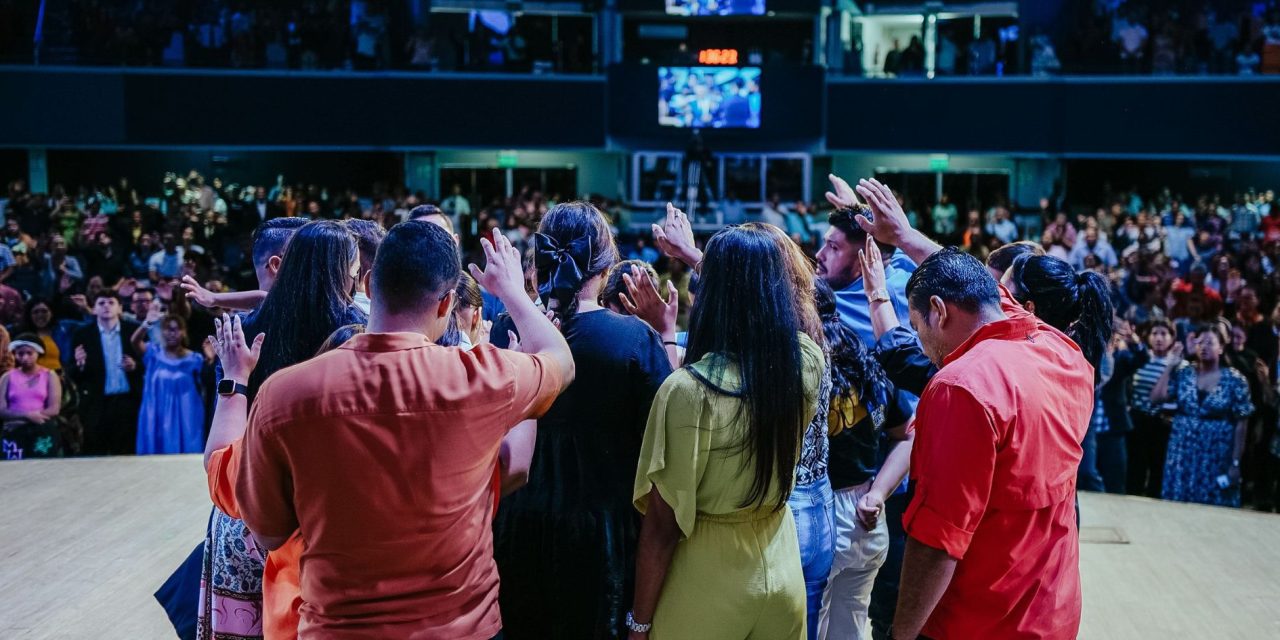
There is something almost magical about a room that knows when to answer. One person starts singing, the congregation responds, and suddenly nobody feels like a spectator.
That is the power behind call and response in Gospel music. It turns worship into a shared conversation, giving people a way to participate through sound. The tradition carries deep spiritual meaning, but its strength is also wonderfully simple: someone speaks, someone answers, and the room becomes part of the music.
Worship Becomes a Shared Conversation
Call and response gives a congregation an immediate way into worship. The leader does not have to explain every step because the musical exchange teaches people what to do.
A phrase is introduced, the response follows, and newcomers can quickly join the pattern. After a few rounds, even the quietest person may find themselves singing along.
Walk into a Pentecostal worship service, and you can see this unfold naturally. A worship leader might begin with a short phrase, leaving enough space for the congregation to answer.
The response then grows stronger as more voices join. What started with one person becomes something much larger.
This is one reason call and response in Gospel music remains so powerful across generations. It does not require everyone to have the same voice or musical experience.
It simply gives everyone a place in the exchange.
Call and Response Can Feel Like Prayer
The pattern can also give prayer a musical shape.
A leader may express a need, a question, or a declaration, while the congregation responds with words that reinforce the message. The exchange can make an individual prayer feel collective.
Consider a simple exchange such as, “Lord, I need You,” followed by, “He is already here.”
The first voice expresses dependence. The second answers with reassurance.
Neither line needs a complicated arrangement. The meaning comes from hearing one statement answered by another.
That moment can become especially powerful when the congregation responds with increasing confidence. The repeated exchange gives people time to absorb the words rather than simply hear them once.
There is also beauty in the space between the two voices. The pause allows the first statement to settle before the response arrives.
That sense of timing is part of what makes call and response in Gospel music feel alive. The voices are not merely repeating lyrics. They are reacting to each other.
The Tradition Still Has Room to Grow
Modern gospel continues to adapt the tradition without losing its communal character. Call and response can appear through choir sections, background vocals, repeated hooks, or exchanges between a lead singer and the congregation.
The setting may change, but the principle remains familiar.
One voice reaches out.
Another answers.
And for a moment, everyone shares the same musical thought.
Conclusion
The spiritual meaning of call and response goes beyond musical structure. It creates participation, gives worshippers a collective voice, and turns individual expression into something shared.
That may explain why the tradition continues to feel so natural. People have always understood the instinct to answer when someone calls.
What makes a musical exchange stay with you long after the final note disappears?
DLK Urban Gospel and Christian Hip-Hop traces the gospel traditions behind today’s Christian music, exploring the voices, sounds, and cultural moments that continue to shape how the genre connects with people.