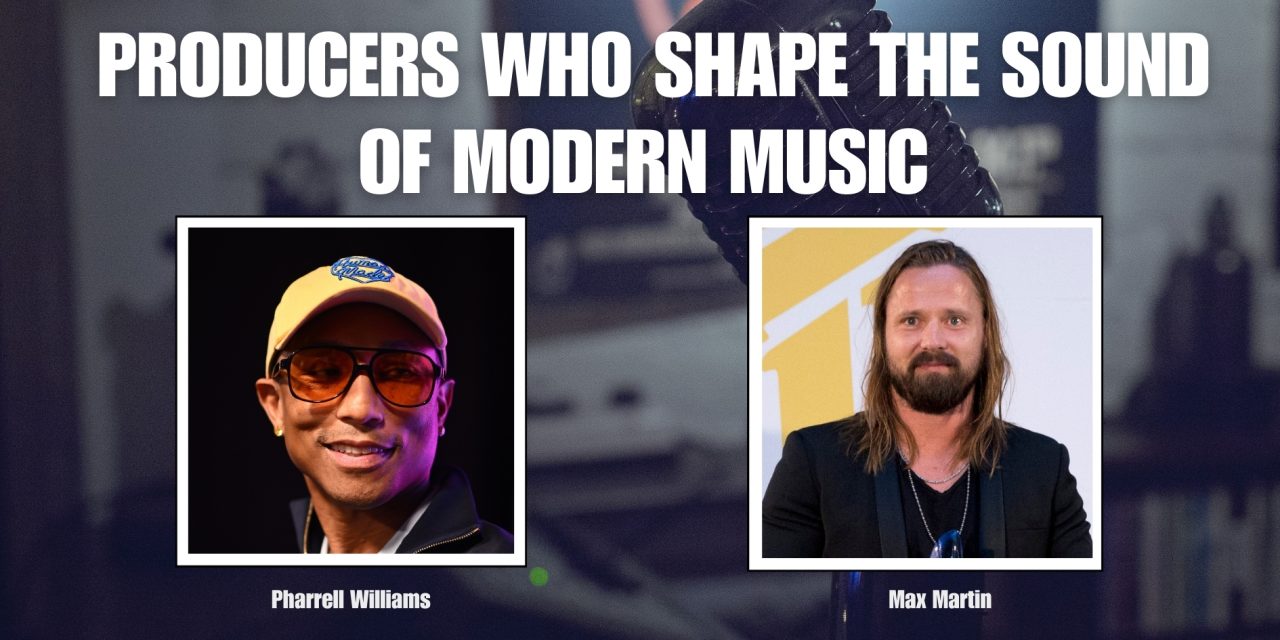
Most people celebrate the artist. Fewer notice the producer quietly adjusting a snare at 2 a.m. Yet without that producer, the hit might never happen.
Today’s leading music producers do more than build beats. They redefine genres, establish trends, and shape the sonic identity of entire eras. Their signature sound often becomes the invisible thread connecting multiple chart-topping records.
This piece explores how influential producers like Pharrell Williams and Max Martin craft innovative techniques and collaboration projects that leave lasting cultural impact. From blending live instrumentation with electronic elements to engineering unforgettable hooks, their work reveals how production decisions shape what the world listens to next.
Pharrell Williams: Blending Groove, Innovation, and Collaboration
Pharrell Williams has built a career on sonic versatility. His style fuses funk, hip-hop, and pop into grooves that feel both nostalgic and futuristic.
His global hit “Happy” highlights his strength in crafting infectious melodies supported by groove-driven production. The rhythmic bounce feels simple at first, yet the layered instrumentation reveals careful construction.
Pharrell frequently incorporates tools like the Moog synthesizer, adding warmth and texture that elevate his tracks beyond minimal pop formulas. That analog richness contributes to his recognizable tonal palette.
His collaboration with Daft Punk on “Get Lucky” showcases his ability to merge electronic precision with live instrumentation. The track balances disco-inspired guitar rhythms with modern production clarity, demonstrating seamless integration of traditional and contemporary sounds.
This collaborative approach, paired with his instinct for memorable hooks, enables Pharrell to create music that resonates across generations while maintaining rhythmic and melodic complexity.
Max Martin: Precision, Melody, and Pop Innovation
Max Martin approaches pop production with strategic precision. His formula blends strong melodic structure with advanced studio technology to consistently produce chart-topping hits.
In Katy Perry’s “Teenage Dream,” Martin expertly combines rhythmic drive with bright, soaring melodies that anchor the song’s emotional core. The production feels expansive yet controlled.
He often utilizes tools such as the Korg Triton keyboard to develop infectious hooks and layered synth lines that define his signature sound. These elements create clarity while maintaining energy.
Aspiring producers can study two of his core techniques. First, layering vocal harmonies adds dimension and emotional lift to a chorus. Second, experimenting with varied synth patches helps refine tonal identity and texture.
Martin also structures dynamic bridges that heighten anticipation before the final chorus. This arrangement strategy strengthens emotional payoff, a defining characteristic of his productions.
Conclusion
Producers like Pharrell Williams and Max Martin demonstrate that music innovation often begins behind the boards. Their collaboration projects, technical choices, and melodic instincts shape global listening trends.
By blending technology with musical intuition, they create signature sounds that influence both artists and audiences. Their work proves that production is not background work. It is cultural architecture.
Which production technique do you think makes the biggest difference in a hit record — vocal layering, synth selection, or song arrangement? Share your thoughts and keep up with real music industry insights shaping culture only at DLK Urban Gospel and Christian Hip-Hop