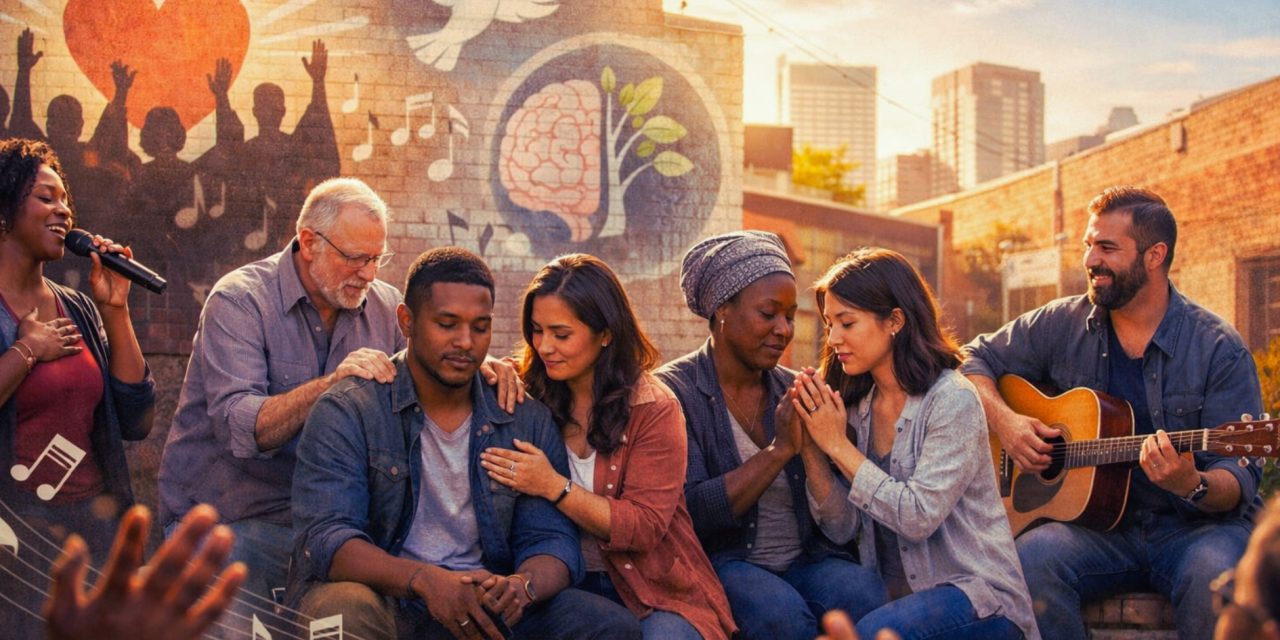
Urban Gospel is increasingly being recognized for more than its sound; it is being noticed for how it makes people feel. As conversations around mental health become more open, this genre is quietly entering spaces once reserved for traditional therapy tools. Music that already speaks to struggle, faith, and resilience has a way of showing up emotionally before anyone asks it to. Sometimes it reaches people faster than a pamphlet ever could.
Still, broader acceptance does not happen automatically. While Urban Gospel carries clear therapeutic value, stigma around mental health and limited public awareness often slow its integration into clinical and community-based settings.
Breaking Barriers to Acceptance Through Community Engagement
The growing acknowledgment of music’s therapeutic potential presents an opportunity for Urban Gospel to play a stronger role in mental health advocacy. However, misconceptions around both gospel music and mental health often prevent this genre from being taken seriously as a support tool. Education and visibility are key to shifting that perception.
Community outreach programs can help bridge this gap by partnering with local churches, mental health professionals, and cultural organizations. Hosting workshops that address mental health through faith-centered conversations creates safe spaces for learning and discussion.
Involving Urban Gospel artists in panel discussions can also humanize the conversation. This is especially true when artists share how music supports emotional healing and personal resilience. These real-life narratives help communities understand the genre’s impact beyond entertainment.
Social media further strengthens this effort by amplifying testimonials and success stories. When listeners openly share how Urban Gospel helped them navigate grief, anxiety, or recovery, the genre gains credibility. It begins to perceived as a meaningful mental health resource rather than a background soundtrack.
Music as a Tool for Awareness, Healing, and Dialogue
Urban Gospel also thrives when communities actively participate in shaping how it supports mental well-being. Creating local playlists that reflect shared struggles and collective hope allows listeners to see themselves in the music. These playlists become emotional mirrors, reinforcing that personal challenges are not faced alone.
Hosting listening sessions and community discussions adds another layer of engagement. These gatherings encourage honest conversations about mental health in environments that feel culturally familiar and spiritually grounded.
Collaborations between local artists and mental health professionals can further deepen impact. They can achieve this through workshops that integrate gospel teachings with music therapy practices. This blended approach helps normalize discussions around faith and mental health rather than positioning them as separate conversations.
When shared consistently through platforms like Instagram and Facebook, these initiatives foster connection, encourage dialogue, and extend healing beyond physical spaces.
Conclusion
Urban Gospel holds real potential as a tool for mental health awareness, emotional expression, and community healing. Its ability to blend faith, culture, and lived experience makes it uniquely positioned to support conversations that are often difficult to start. With intentional outreach, education, and collaboration, the genre can move from being emotionally supportive to being widely recognized as culturally and therapeutically valuable.
Can Urban Gospel help reshape how communities approach mental health and healing? Explore how faith, culture, and sound intersect on DLK Urban Gospel and Christian Hip Hop, where conversations about music and well-being continue to grow.